
A practical window-covering guide
Blinds vs Shutters
Choosing blinds or shutters? Blinds usually offer a lower starting price and more fabric choices. Shutters give a fitted, framed finish with adjustable louvres. The right choice depends on how you need the window to work.
Compare your optionsBy London Shutter Specialists · Window planning, supply and fitting
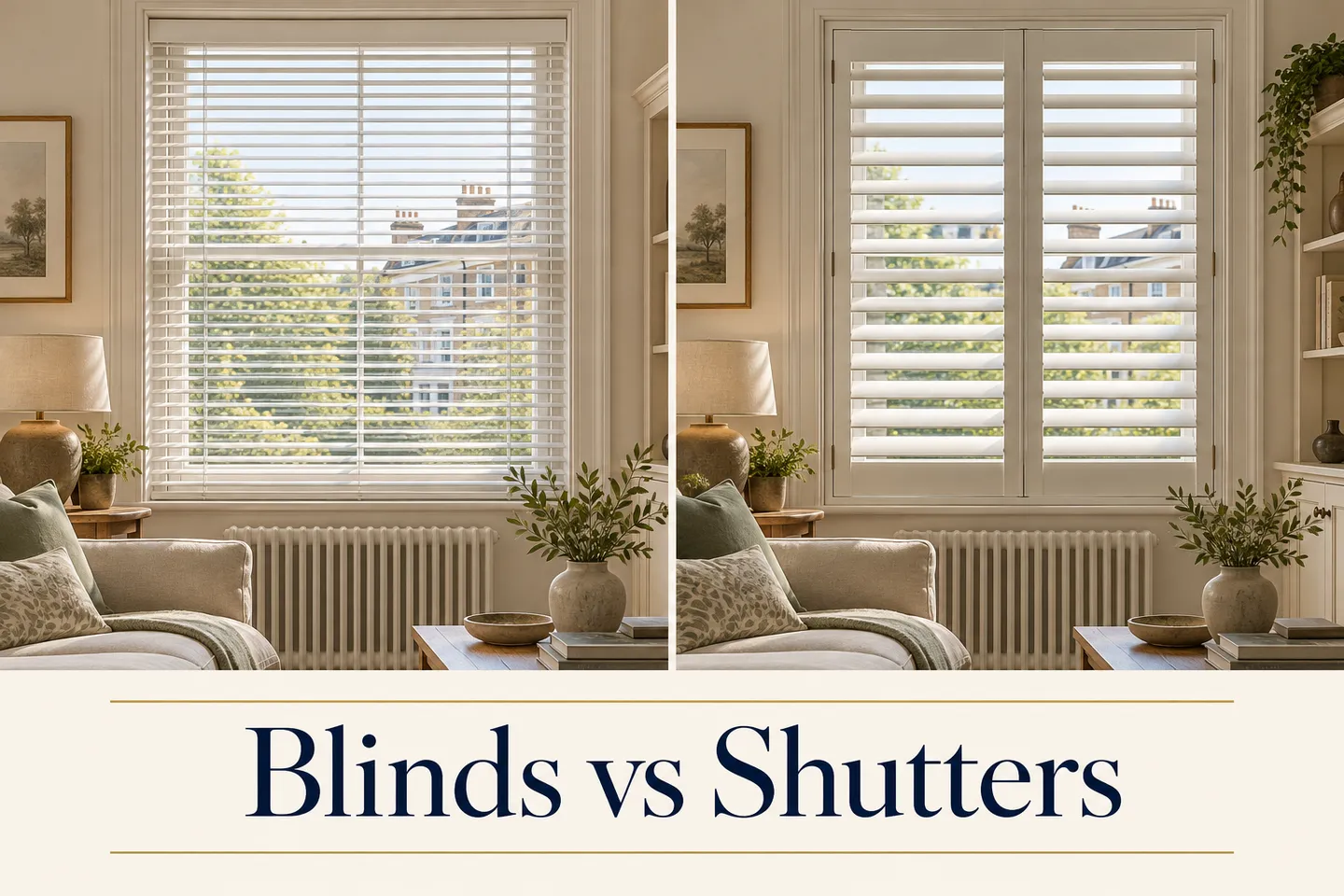
Window shutters vs blinds: the quick comparison
Choose blinds if…
Your priority is a lower initial cost, a fabric finish or a covering that lifts away from most of the glass.
Choose shutters if…
You want a fitted frame, adjustable louvres and a consistent finish across your windows.
Consider both if…
You like shutters by day but need an extra blackout layer for sleeping. Check the combined fit first.
| Priority | Blinds | Shutters |
|---|---|---|
| Starting cost | Basic roller or Venetian blinds usually cost less. Bespoke fabrics and motors add cost. | Made-to-measure panels, frames and fitting usually mean a higher initial cost. |
| Daylight & privacy | Venetians tilt; rollers raise or lower. Fabric opacity matters, especially after dark. | Louvres tilt while panels stay shut. Split tilt can separate upper and lower light control. |
| Blackout | Blackout fabric stops light through the fabric; gaps around it still matter. | Standard louvred shutters are not blackout. Consider a compatible blind as an extra layer. |
| Clear view & access | A raised blind leaves much of the glass clear, with a roll or stack at the top. | Panels need opening or stacking space. Fixed frames and posts remain in place. |
| Cleaning | Venetian slats need dusting. Fabric cleaning depends on its care instructions. | Dust each louvre and frame. Use only cleaning methods suitable for the finish. |
| Life & repairs | Ask about replacement fabrics, cords, controls and motors. | Ask about hinges, louvre repairs and the finish warranty. Lifespan is not guaranteed. |
| Warmth | Cellular blinds and other fitted systems can add insulation at the window. | Closed shutters add a layer at the window. Fit, glazing and use affect the result. |
What is the difference between shutters and blinds?
The main difference is construction. Shutters have rigid panels fitted within a frame; blinds usually hang from a headrail or roller and lift, fold, roll or tilt. Both can be made to measure.
What are plantation shutters?
Plantation shutters are interior shutters with adjustable horizontal louvres inside framed panels. Tilt the louvres for light and privacy; open the panels for access to the window. They differ from solid shutters, which have opaque panels without adjustable slats.
- Full height: one tier of panels covers the whole opening.
- Tier on tier: upper and lower panels open independently.
- Café style: covers the lower window, leaving the upper glass clear.
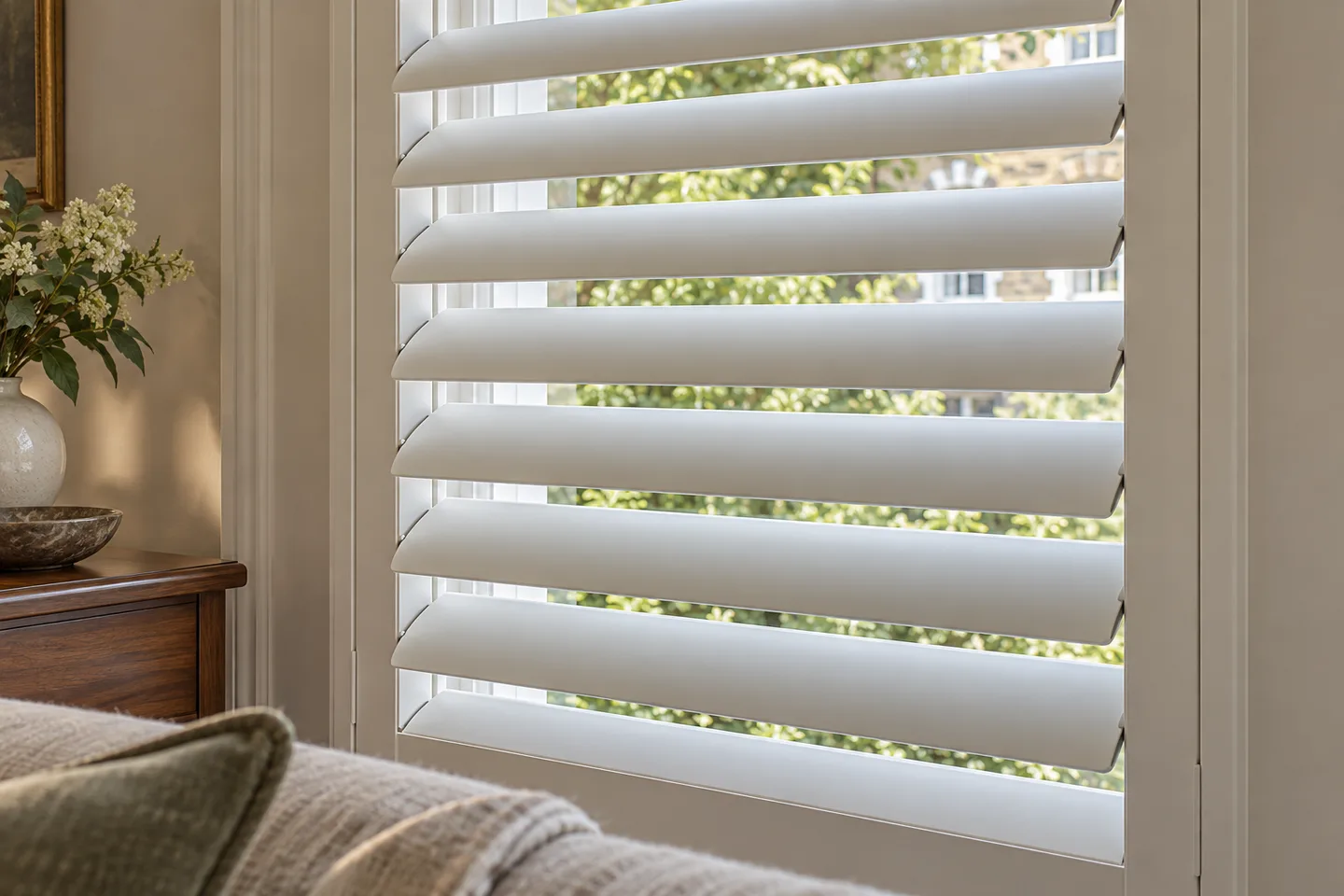
Compare shutters with the right type of blind
- Venetian blinds are the closest comparison: horizontal slats tilt for privacy, then lift into a stack. Wooden blinds still operate differently from wooden shutters.
- Roller blinds give a simple sheet of fabric that raises or lowers. Choose the fabric for daylight filtering, privacy or blackout.
- Roman blinds fold into fabric pleats. Allow for the stack above the glass and follow the fabric’s cleaning guidance.
- Cellular or honeycomb blinds have a pleated structure. Compare the complete system when insulation or darkness matters.
- Vertical blinds have rotating vertical strips that draw aside. Check where the stack sits on wide glazing or doors.
These are comparison options, not a list of every product we supply. We supply and fit shutters and offer motorised roller blinds. Images on this page are illustrative design inspiration.
Privacy by day, darkness at night
Louvred shutters and Venetian blinds let you change the angle of incoming light while the covering stays closed. Split-tilt shutters can screen the lower glass while leaving the upper louvres more open.
- Test privacy from the actual overlooking angle, including upstairs windows opposite. No slat angle guarantees privacy from every direction.
- Repeat the check after dark with the room lights on. A sheer blind that feels private in daylight may reveal silhouettes at night.
- For sleep, inspect the whole perimeter. Standard shutters have light gaps; blackout fabric alone does not seal a blind’s edges.
Shutters & blinds can work together: an integrated honeycomb blind or a compatible roller blind adds another layer behind the panels. The recess must accommodate the frame, blind, controls and window handles.
Compare blackout shutter arrangements →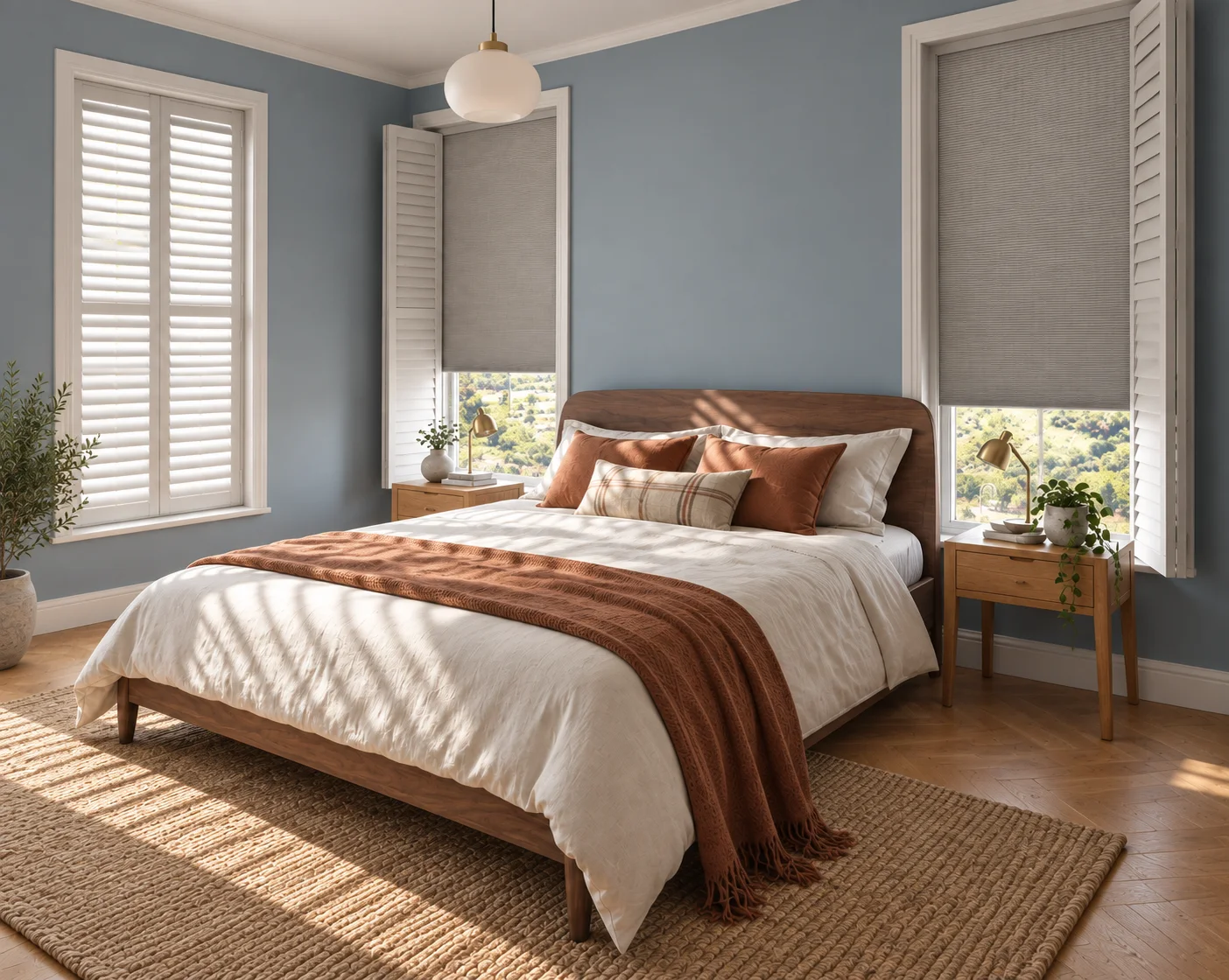
Blinds or shutters? Start with the room
Choose around the job the covering must do. You can use shutters at the front of the house and blinds elsewhere.
| Room or window | Worth comparing | Check before choosing |
|---|---|---|
| Street-facing lounge | Split-tilt or café shutters; Venetian blinds | Check sightlines from pavement level and upstairs opposite. Café shutters leave upper glass uncovered. |
| Bedroom | Blackout blind; shutters plus a compatible blackout layer | Check edge gaps, streetlights and the space needed to operate both coverings. |
| Kitchen or bathroom | A moisture-suitable blind or waterproof shutter range | Confirm suitability for the actual splash and humidity level, including the fittings. |
| Home office | Adjustable slats or a suitable roller fabric | Test screen glare at the time you work. A sheer fabric may not give privacy at night. |
| Bay window | Separate blinds for each face or a planned shutter layout | Check corner collisions, handles and where open panels or blind fittings will sit. |
| Rented or short-term home | A suitable removable blind system | Check fixing permission and window compatibility before ordering any covering. |
Five practical checks before you order
- Open the window fully. Check handles, sash travel and inward-opening panes. Decide how you will reach them with the covering fitted.
- Mark the opening space. Use the proposed panel width to check its swing past sofas, taps and bedside tables. Allow for folded panels or a raised blind stack.
- Look at samples in your room. Compare daylight, evening privacy and glare from your usual seat. A showroom view will not reveal your window’s sightlines.
- Check cleaning and repairs. Ask how to reach both sides, what products to use and whether worn parts can be replaced. Do not assume all finishes tolerate water.
- Plan daily operation. Can everyone reach the controls? If choosing motorisation, agree power or charging access and how it will be used day to day.
For a draughty room, assess the window as well as the covering. Neither shutters nor blinds repair poor seals, and neither should obstruct required ventilation.
Shutters or curtains — or both?
Curtains bring softness, pattern and an extra lining option. Shutters suit a neat framed finish and adjustable slats. Combining them can give daytime privacy with a softer bedroom scheme.
- Choose curtains when fabric is central to the room and there is enough wall space for the open stack.
- Choose shutters when you want adjustable louvres and less fabric around the window.
- Combine them only after checking that the curtain track and fabric leave room for shutter panels to open.
- For darkness, check curtain overlap and light at the top and sides as well as the lining.
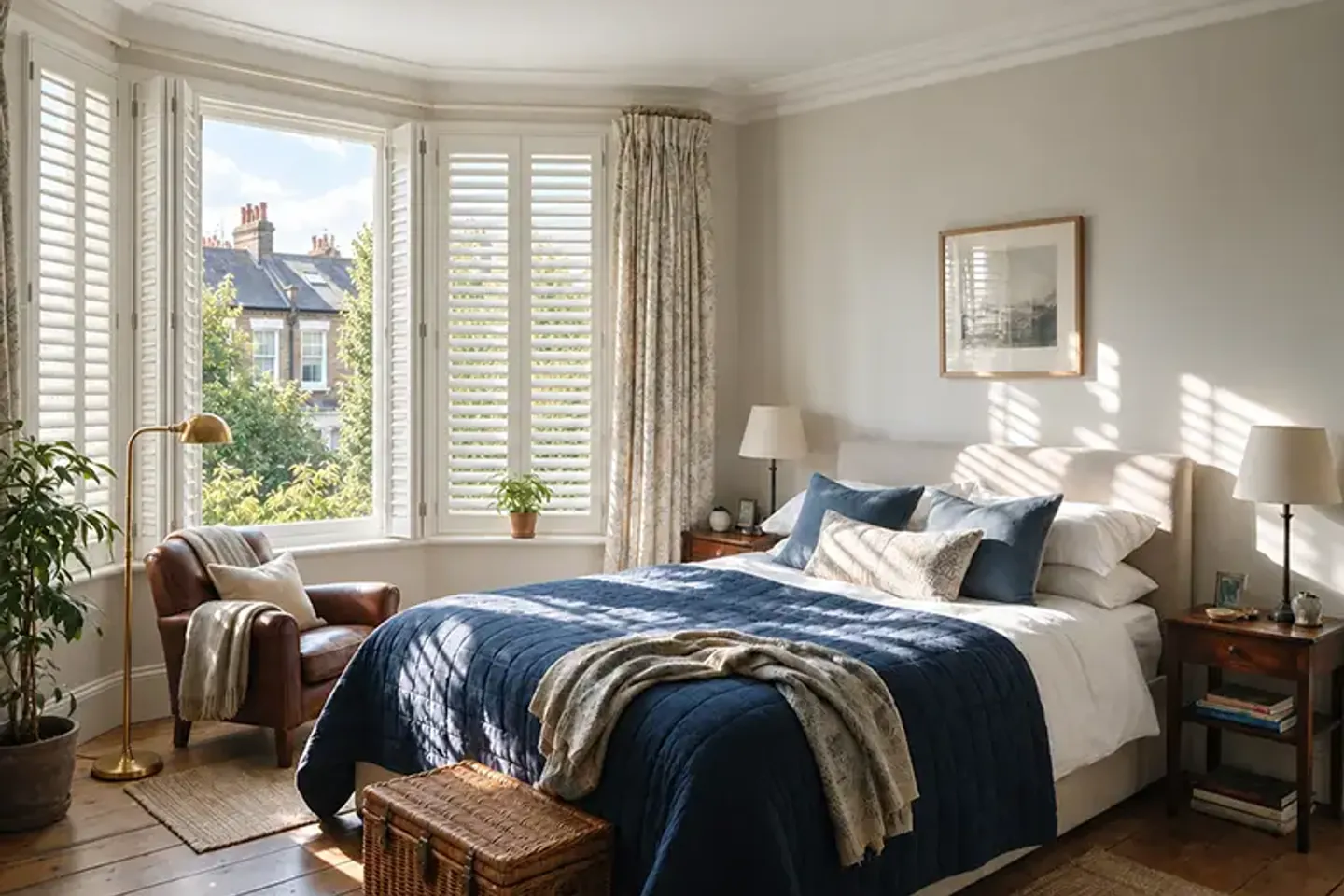
Shutters versus blinds: compare the full cost
Basic blinds usually have the lower starting price. Made-to-measure shutters include rigid panels, frames and fitting; premium blind fabrics, motors and blackout systems can narrow the difference. Compare quotations for the same windows and result.
| Compare | Ask for |
|---|---|
| Openings & coverage | The same windows and covered area. Half-height café shutters are not equivalent to full-window coverage. |
| Product & operation | Material, finish, panel layout or fabric, plus manual or motorised controls. |
| Complete fitted price | Survey, delivery, installation, VAT and any removal or making-good work. |
| Blackout & extras | Any extra blind, cassette, side channels, power supply or charging equipment. |
| Aftercare & timing | Lead time, warranty exclusions, parts availability and responsibility for measuring errors. |
A simple way to make the decision
Subtract the complete fitted blind quote from the complete fitted shutter quote. Then ask which extra benefits that difference buys for your room: the framed appearance, chosen privacy layout or preferred operation. Avoid justifying the difference with unverified energy savings, resale gains or fixed replacement cycles.
Our pricing guide provides indicative fitted shutter budgets. At a free home survey, we check the opening, show samples and quote for the agreed specification.
Check indicative shutter pricesShutters or blinds: your questions answered
Are shutters better than blinds?
Shutters suit a fitted appearance and adjustable privacy; blinds suit a lower starting budget, fabric schemes or a window you want to uncover easily. Choose by the room’s main need rather than expecting one option to win every category.
Are wooden blinds the same as plantation shutters?
No. Wooden Venetian blinds have slats suspended from a headrail, usually on cords or tapes, and lift into a stack. Plantation shutters have louvres within rigid panels that open on hinges or a track. Both can tilt their slats.
Do shutters make a room darker than blinds?
They can reduce daylight because the frame, rails and louvres occupy part of the opening. A raised roller blind often reveals more glass. Compare samples with the shutters tilted open and check where a raised blind would sit.
Which lasts longer: shutters or blinds?
Well-made shutters can be a long-term fixture, but there is no reliable universal lifespan comparison. Material, sunlight, moisture, handling and repairability matter. Compare written warranties rather than assuming blinds need replacing every few years.
Can shutters and blinds go on the same window?
Yes, if the recess, frame and controls allow it. An integrated blackout blind or compatible roller blind can sit behind shutters. Have the combined depth and operating clearances checked before ordering either product.
Are shutters easier to clean than blinds?
Shutters and Venetian blinds both need individual slats dusting. Shutters avoid fabric washing, but they are not maintenance-free. Roller and Roman fabrics have different cleaning limits; follow the product’s care guidance.
Will shutters reduce heating bills or add value to my home?
Do not budget on a guaranteed saving or increase in sale value. Window coverings can affect comfort and appearance, but results depend on the property, glazing, fit and use. Choose a system that meets your needs at a price you can justify.
Samples, measurements and advice
Find the right fit for your windows
Considering shutters, motorised roller blinds or a compatible combination? Tell us your postcode and whether privacy, light control or window access matters most. We’ll help plan the layout at your free home survey.