
Light control & bedroom comfort
Blackout Shutters: Do Plantation Shutters Block Out Light?
Shutters give you flexible daylight and privacy. For a darker bedroom, the important detail is what sits behind the panels — and how light is managed around the frame.
By London Shutter Specialists · Guide reviewed 29 September 2026
Find the right blackout option ↓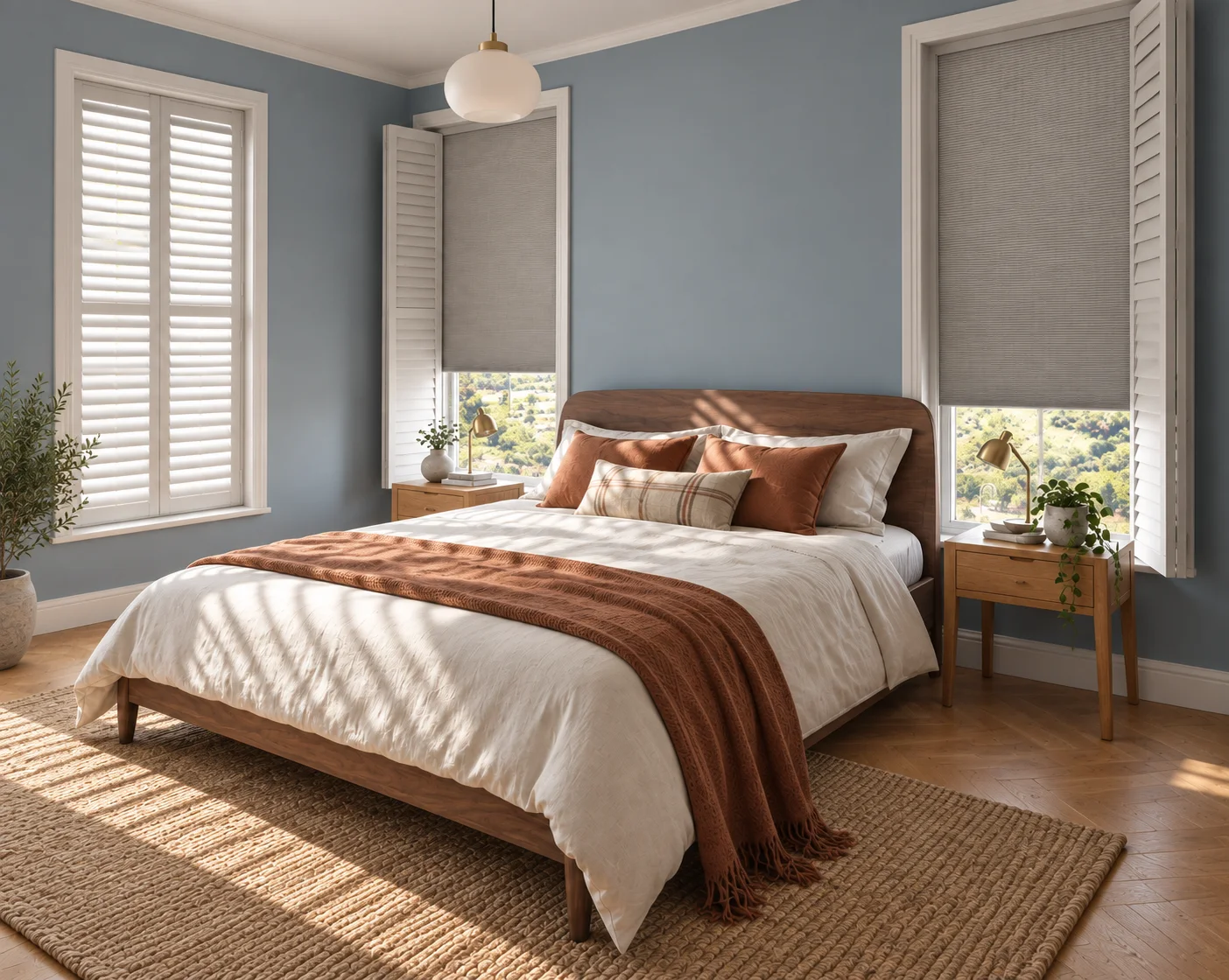
Are plantation shutters blackout?
Standard plantation shutters block direct light and darken a room, but they do not provide total blackout on their own. Small gaps between moving louvres, panel joins and the frame can let light through. Shutters with integrated blackout blinds add a second layer for substantially greater room darkening.
“Blackout shutters” usually means a combination of shutters and a blackout blind, rather than an ordinary louvred shutter. The fabric blocks light through the blind itself; the frame, edge channels and fitting determine how much light can pass around it.
For a London bedroom facing a street lamp or the early morning sun, explain when the light bothers you and how dark you want the room. A daytime demonstration of the proposed system is more useful than a blanket “100% blackout” claim.
How do shutters with integrated blackout blinds work?
A blackout blind sits between the window and the shutter panels. In an integrated system, a specially designed frame houses the blind and helps cover its edges. Many systems use a pleated honeycomb blind that folds away when raised.
The shutter and blind have separate jobs: use the louvres to adjust daylight and privacy, then lower the blind when you want a darker room. We offer an integrated honeycomb blackout blind option within our shutter range, with suitability checked for your windows.
How the layers work
1. Window
Daylight enters through the glass.
2. Blackout blind
A separate blind covers the opening behind the shutters.
3. Shutter panels
Adjustable louvres control daylight when the blind is raised.
Ask to see the whole assembly, including the top, sides and bottom. A blackout fabric sample tells you about the material; it cannot show the effect of gaps in a finished window. A well-designed combination can achieve near-blackout conditions, but the result depends on the chosen system and installation.
Motorised roller blinds behind shutters
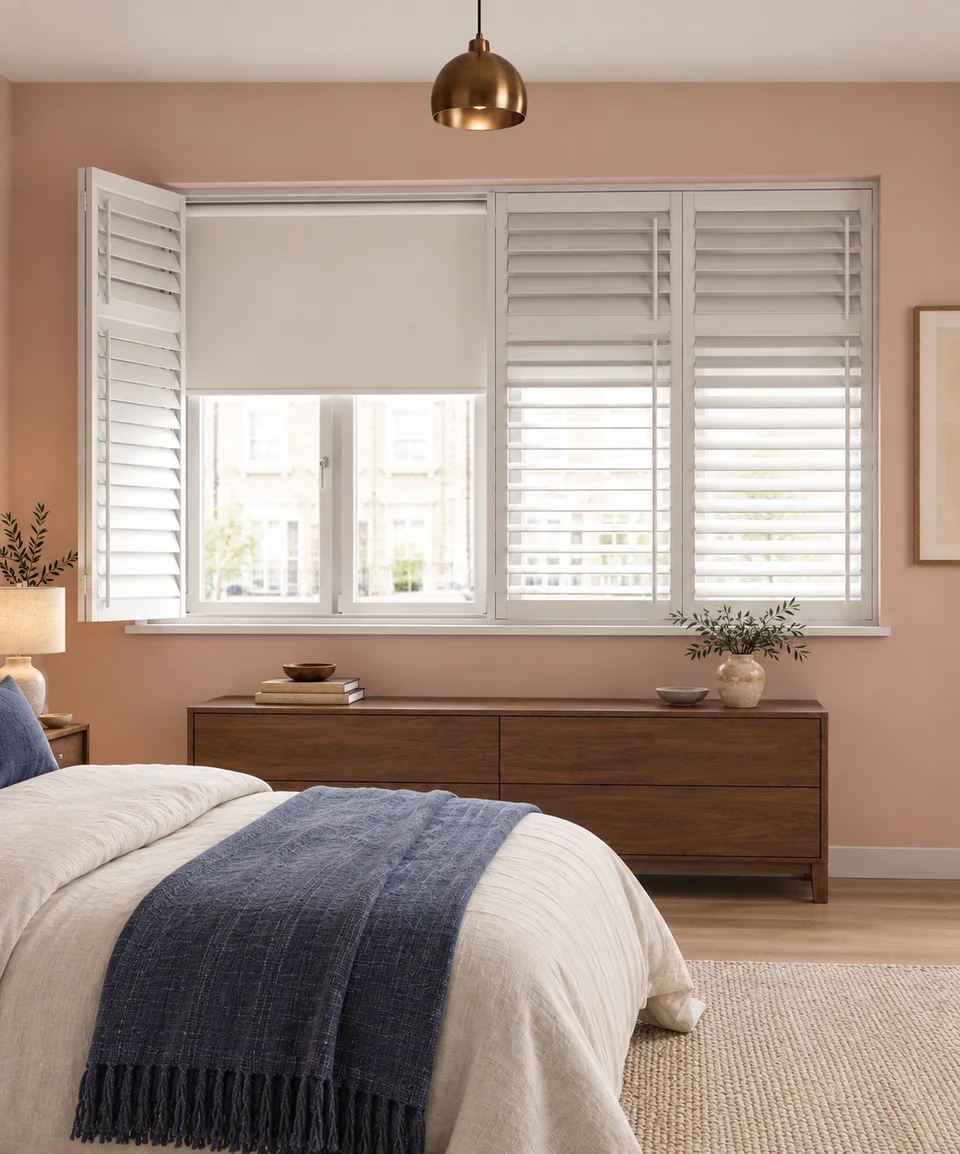
We also offer motorised roller blinds. A roller blind uses a smooth sheet of fabric that rolls up at the top of the window, giving you another way to combine a blind with plantation shutters. Motorised operation lets you raise and lower the blind without reaching behind the shutter panels to pull it by hand.
For a darker bedroom, ask about the blackout fabric and how the blind will cover the window edges. The motor controls movement; the fabric, frame and edge coverage determine the light reduction. A roller blind and a honeycomb blind are different systems, so we will check which arrangement suits the space behind your shutters.
At your consultation, confirm the available controls, power supply and access for charging or maintenance where relevant. We will also check that the blind clears the louvres and window handles. Any remote, timer or smart-home features should be specified in your quote for the chosen motor system.
Shutters with blinds, solid panels or curtains?
Start with the amount of darkness you want and whether you already have shutters. These are the main options to compare when choosing blackout shutters in the UK.
Swipe across the table to compare each option.
| Option | What it offers | What to check |
|---|---|---|
| Standard louvred shutters | Adjustable daylight, privacy and a darker room when closed. | Light can remain between louvres and at panel edges. |
| Shutters with an integrated blackout blind | A coordinated extra layer for much greater darkness. | Frame compatibility, edge channels, controls and window access. |
| Shutters with a separate blackout blind | An extra layer that may work with existing shutters. | Recess space and clearance; an ordinary roller blind can leave side gaps. |
| Solid shutters | Opaque panels without the joins between louvres. | Light can still pass at the perimeter and between panels. |
| Shutters with blackout-lined curtains | A further covering in front of the shutters. | Coverage at the top and sides, overlap and space for opening panels. |
For a new installation where darkness is a priority, ask about an integrated blind early. For existing shutters, have the available space assessed before buying a separate blind or curtain track.
Do shutters block out light when the slats are closed?
Yes. Close the panels into their frame, then bring the louvres into their designed closed position. The overlapping slats reduce direct light, while opening them admits more daylight. Even when closed, moving parts need clearance, so fine light lines do not automatically mean the shutters have been fitted badly.
Should the louvres face up or down?
Many plantation shutters close most tightly with the louvres tilted upwards. The correct position depends on the mechanism and louvre profile, so follow the fitter’s demonstration and move them gently. Partly tilting the slats changes the direction of light and the view through the window; it does not seal the opening.
What happens with plantation shutters open?
Opening the louvres lets light through while the panels stay in place. Folding the panels back clears more of the window, although the fixed frame remains. With an integrated blind, raise the blind too when you want maximum daylight. Lowering it covers the glass even while the shutter louvres remain open.
Which shutters suit a darker bedroom?
Full-height shutters cover the whole window and are a useful starting point. Café-style shutters leave the upper glass uncovered, so they need another covering across the full opening if darkness is the aim.
Tier-on-tier shutters let the upper and lower panels open separately. Discuss how an integrated blind would operate behind that arrangement. Solid panels remove the light paths between louvres, but their edges and joins still need attention.
For sash windows, keep catches and sliding sections accessible. For bay windows, check each face, corner and blind section as part of one design. A blind suitable for a straight rectangular window is not automatically suitable for every bay or shaped opening.
Are solid panel shutters blackout?
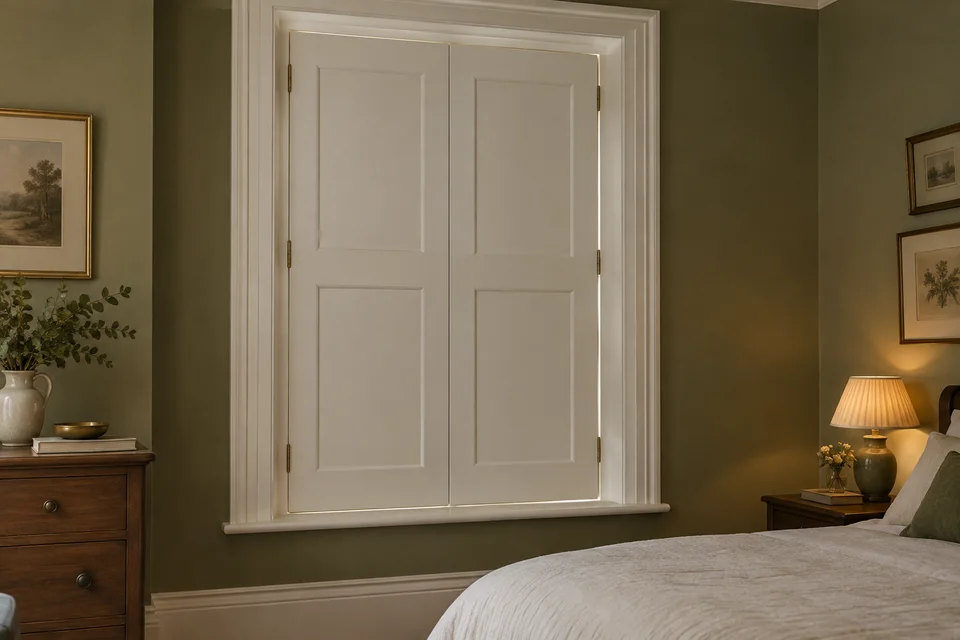
Solid panel shutters have opaque wooden panels instead of adjustable louvres. When closed, they cover the glass without the rows of gaps between slats, making them a good option when you want strong light reduction and a traditional appearance.
They can still admit narrow lines of light around the frame and where the panels meet. If complete darkness is essential, discuss those details at the survey rather than assuming that a solid panel seals the entire window.
Solid panels or louvred shutters with a blind?
Solid panels suit period bedrooms and traditional sash windows. Open the panels to bring in daylight; there are no slats to tilt while keeping the panels closed. Louvred shutters with a separate blackout layer give you more ways to adjust daylight and privacy during the day.
Our solid shutters are available in the Austin and Newport hardwood ranges. A full-height arrangement covers the whole window, while café-style solid panels leave the upper glass clear. We can help you choose the panel layout and check the space needed to fold them back.
Can you add blackout blinds to existing shutters?
Sometimes. A separate blind may fit behind existing shutters if there is enough depth for the blind, brackets and controls without touching the louvres or window handles. A purpose-designed integrated blind is not a universal insert for any shutter frame.
Before ordering, ask the installer to check the recess depth, panel swing, louvre movement, handle clearance and how you will reach the blind. Photos of the full window, the open panels and the top of the recess are a useful starting point; final dimensions need checking in person.
If there is too little room behind the shutters, blackout-lined curtains in front may be another option. Plan their position so the shutter panels can still open and the curtains cover the window edges.
How much do blackout shutters cost?
A shutter-and-blind combination needs a quote for both parts and their frame. The total depends on window size, shutter material, panel layout, blind specification, controls and fitting. Bays and multiple blind sections need their own allowance.
Our plantation shutter cost guide and price calculator give indicative shutter budgets. They do not include a fixed integrated-blackout-blind surcharge. Request a written price for your proposed combination.
Five things to confirm at your survey
- How dark you need the room, and at what time of day.
- Which blind and frame are included, with a demonstration of the edge coverage.
- How the panels, louvres, blind and window will open.
- Whether measuring, fitting and VAT are included in the quote.
- What the shutter and blind warranties each cover, and how the blind is serviced.
Blackout shutter questions
Are shutter blinds blackout?
If you mean standard plantation shutters with adjustable louvres, they reduce light but do not create complete blackout by themselves. Shutters with an integrated blackout blind add a separate light-blocking layer behind the panels.
Do window shutters block out light from street lamps?
Yes. Closing the panels and louvres reduces light from street lamps as well as daylight. Fine lines of light can remain at the edges and joins; a fitted blackout blind behind the shutters helps cover those light paths.
Do shutters make a room dark during the day?
Closed shutters can make a room considerably darker. Open the louvres or fold back the panels when you want daylight. If you need a very dark bedroom in bright daytime conditions, discuss an integrated blind and the frame details at your survey.
Can I leave plantation shutters open with the blackout blind down?
The two layers can operate independently in a suitable integrated system. With the blind lowered it still covers the window, even if the shutter louvres are open. Check how the blind controls are reached and whether the panels need to open to operate them.
Are black out shutters the same as black shutters?
“Black out shutters” describes a light-control function. It does not mean a black paint finish. Blackout plantation shutters can have white or other coloured frames; the blind fabric and the way the window is covered determine the light reduction.
Do blackout shutters work on bay or sash windows?
They may be suitable, but the layout needs a survey. Bay angles, separate window sections, sash catches and the depth behind the shutters affect the design. Confirm blind compatibility and access to every opening before ordering.
Plan a darker bedroom
Tell us about your windows and the light you want to reduce. At a free home consultation, we can discuss shutter styles, check the space for an integrated blind and prepare a supplied-and-fitted quote for your London home.
Ask about shutters with blackout blinds