47mm
Approximately 1⅞″
Fine & traditional
The closest-spaced look in our collection. Consider it for smaller windows or where you prefer lots of fine horizontal detail.

Fully insured
For your peace of mind
10-year warranty
5 years on PVC shutters
Backed by decades of expertise
In blinds and shutters
Free home survey
Measured for your home
The details that shape your view
Fine and traditional, or broad and open? Compare our 47mm, 63mm, 76mm, 89mm and 114mm louvres to find the look that suits your windows.
We supply and fit made-to-measure internal louvre shutters across London. This guide helps you narrow down the choices before your free home survey.
Five sizes, different proportions
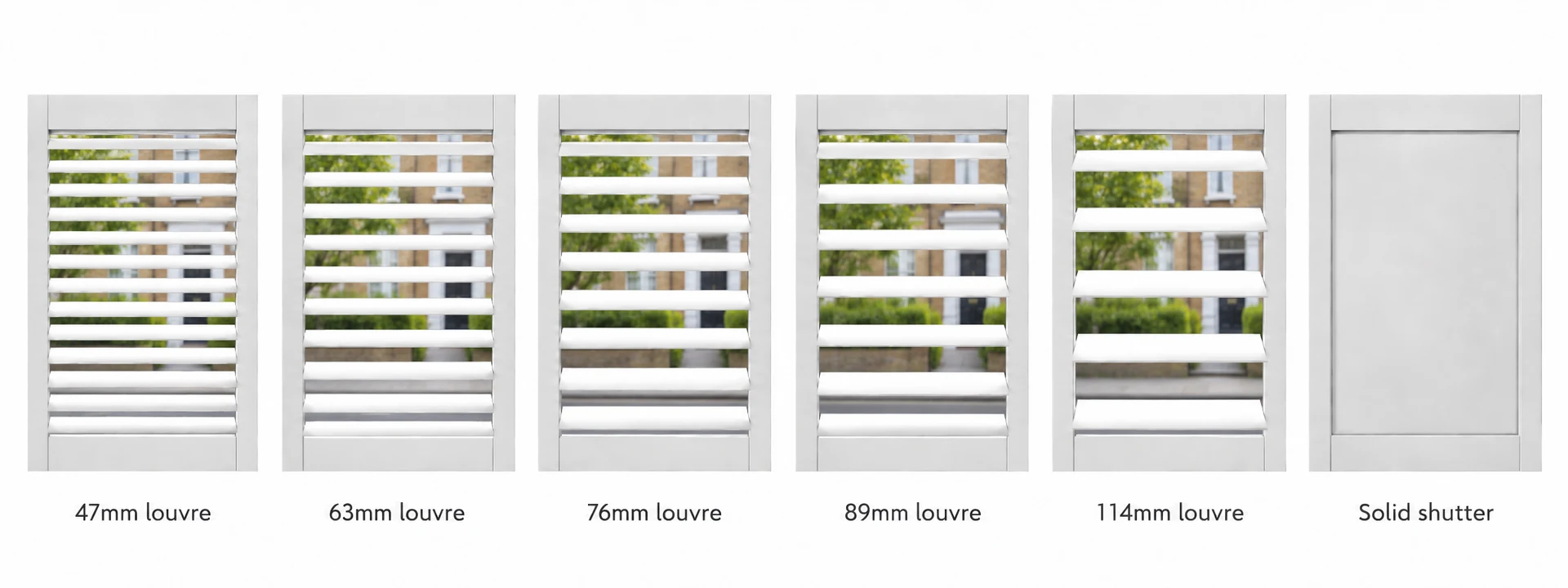
A louvre is one of the horizontal slats inside a shutter panel. Its size is the width across the blade, from one long edge to the other. It is separate from the length of the blade, the width of the panel and the gap you see when the slats are tilted.
For the same panel height, smaller louvres usually mean more blades. Larger louvres mean fewer blades and wider spaces between them when open. The frame, rails and tilt angle also shape the finished view.
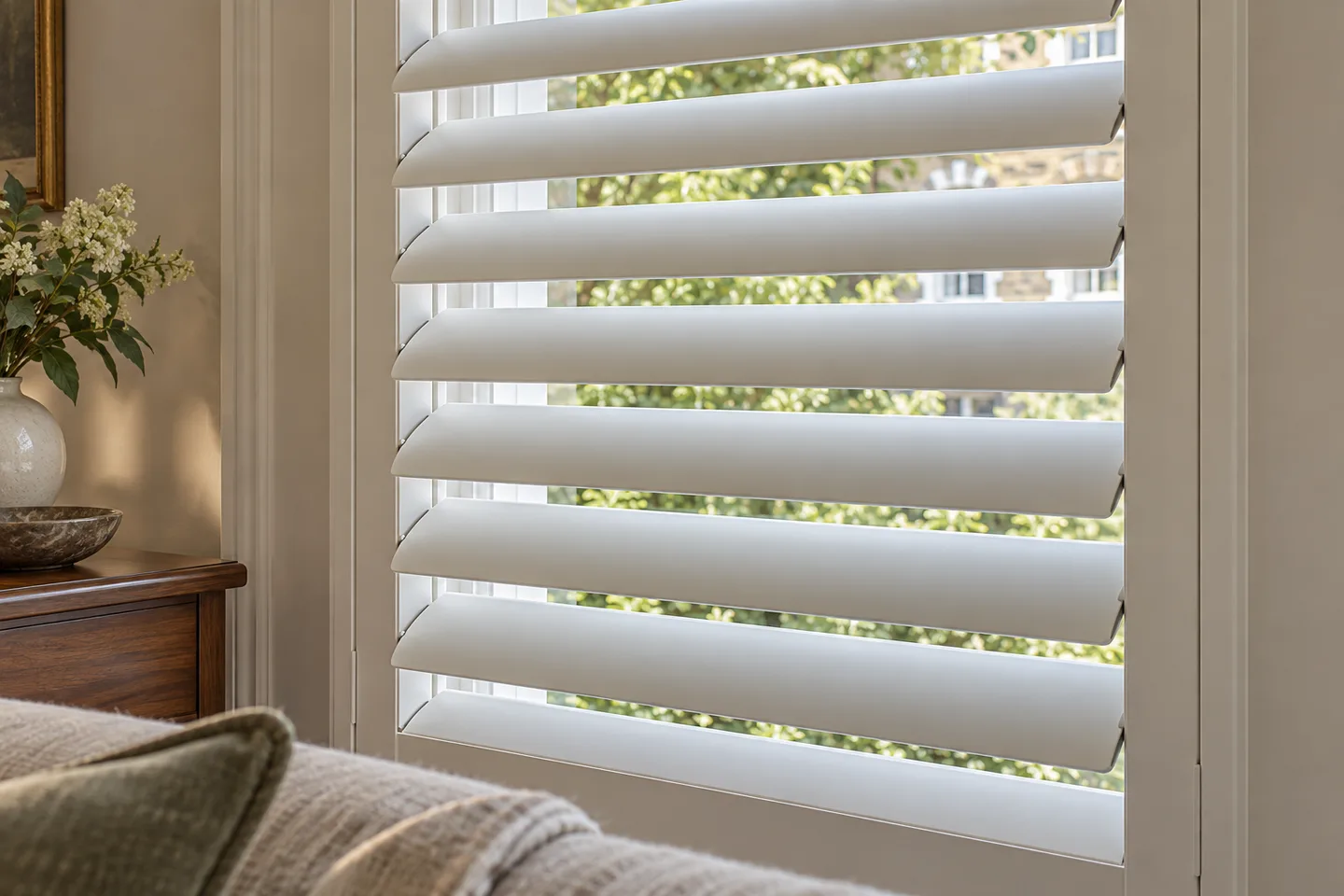
Approximately 1⅞″
Fine & traditional
The closest-spaced look in our collection. Consider it for smaller windows or where you prefer lots of fine horizontal detail.
Approximately 2½″
Fine detail & a closer fit
Consider this for a traditional pattern, matching existing shutters or where blade clearance is limited. For folding panels, check the complete frame and hinge arrangement.
Approximately 3″
Our recommended starting point
Start here for a balance of daylight, an open view and everyday light control. With fewer blades than 63mm across the same height, it generally admits more light when tilted fully open.
Approximately 3½″
An open, contemporary look
Fewer blades across the same panel height and wider gaps when open. Worth considering for larger windows and a clearer view of the garden.
Approximately 4½″
Broad & architectural
Our widest louvre option. A bold choice for generous windows, with fewer horizontal interruptions. Check turning clearance and panel proportions carefully.
Inch sizes are approximate equivalents, rounded to familiar fractions. Sizes vary by range; see material choices below.
The close comparison
For a new installation, we recommend starting with 76mm if you want plenty of daylight and an open view. Keep 63mm in the comparison where finer detail, existing shutters or fitting clearance guide the choice.
A comparable panel has fewer blades than with 63mm louvres. With the blades fully open, that generally means less obstruction and more daylight. The difference depends on the blade profile, tilt, rails and window, so there is no single percentage improvement for every installation.
The finer pattern can suit traditional joinery or an existing shutter scheme. A smaller blade also needs less turning space. If you want panels that fold back regularly, discuss 63mm alongside the frame position and hinges rather than choosing on slat size alone.
Ready to choose between the two? Read our 63mm or 76mm shutter louvres comparison for a practical sample checklist and window-by-window advice.
Folding shutters do not automatically require 63mm louvres: 76mm can also work in a suitable system. Panel widths, hinge positions, tilt controls and where the frame sits determine how the panels stack. Depending on the design, you may need to close the louvres before folding the panels together.
Tell us whether you expect to leave the panels across the window and tilt the blades, or fold them away each day. We will check that the chosen layout supports the way you want to use it.
Larger louvres generally give a less interrupted view when tilted open. Compare them at the same angle: almost closed blades will still screen the glass, whatever their size. Opening the whole shutter panel is a separate way to reveal the window.
Check the view from pavement level and neighbouring windows. Angle the blades to screen that sightline. With the lights on indoors after dark, you may need to close them further; blade size alone cannot promise privacy.
Choosing smaller slats does not turn plantation shutters into blackout shutters. Small light gaps can remain between blades and around frames. If darkness is the priority, consider a suitable shutter-and-blackout-blind combination.
More control, section by section
Louvre size shapes the look of your shutters. Split tilt adds another choice: adjusting different sections of louvres independently within the same panel.
For example, close the lower louvres to screen the view from the pavement while leaving the upper section tilted open for daylight. You can change either section as the sun moves or your privacy needs change, with the shutter doors still closed across the window.
Split tilt separates the movement of the louvres within a panel. Tier on tier shutters have separate upper and lower doors that can also swing open independently. Choose around how you want to use the window each day.
Available controls, the number of sections and the split position depend on the range and panel size. We confirm these at your survey, including any split required by the mechanism’s operating limits.
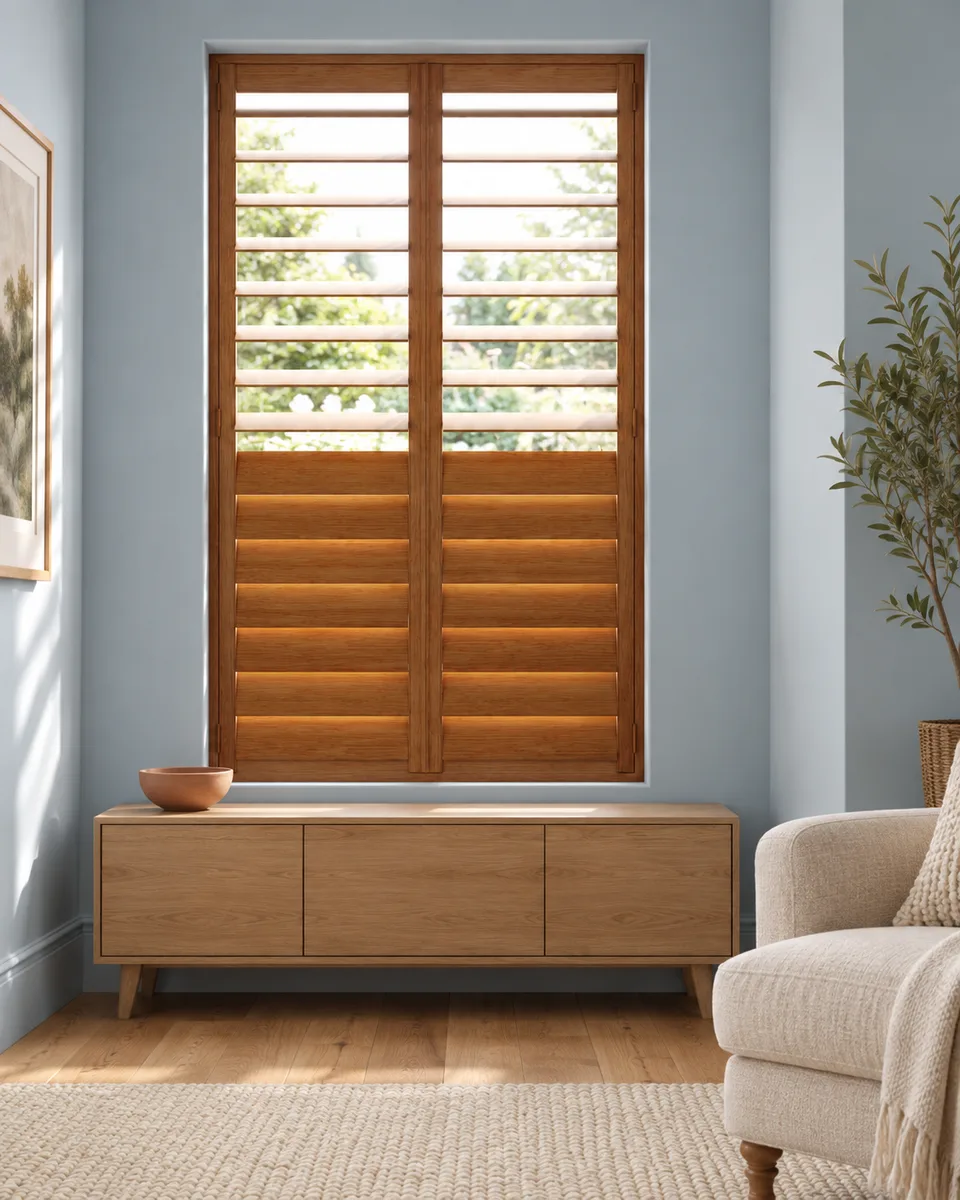
Separate sections of the tilt rod let you move one group of louvres without moving the others. We plan the split height around the window and the sightlines you want to screen.
With a suitable InvisiTilt configuration, the mechanism sits inside the panel stile. Separate mechanisms control different louvre sections, keeping the front free of a visible tilt rod.
A horizontal rail can divide the panel into upper and lower louvre sections. It can align with a window rail and may be required for strength on taller panels, depending on the range.
Check the fit before choosing
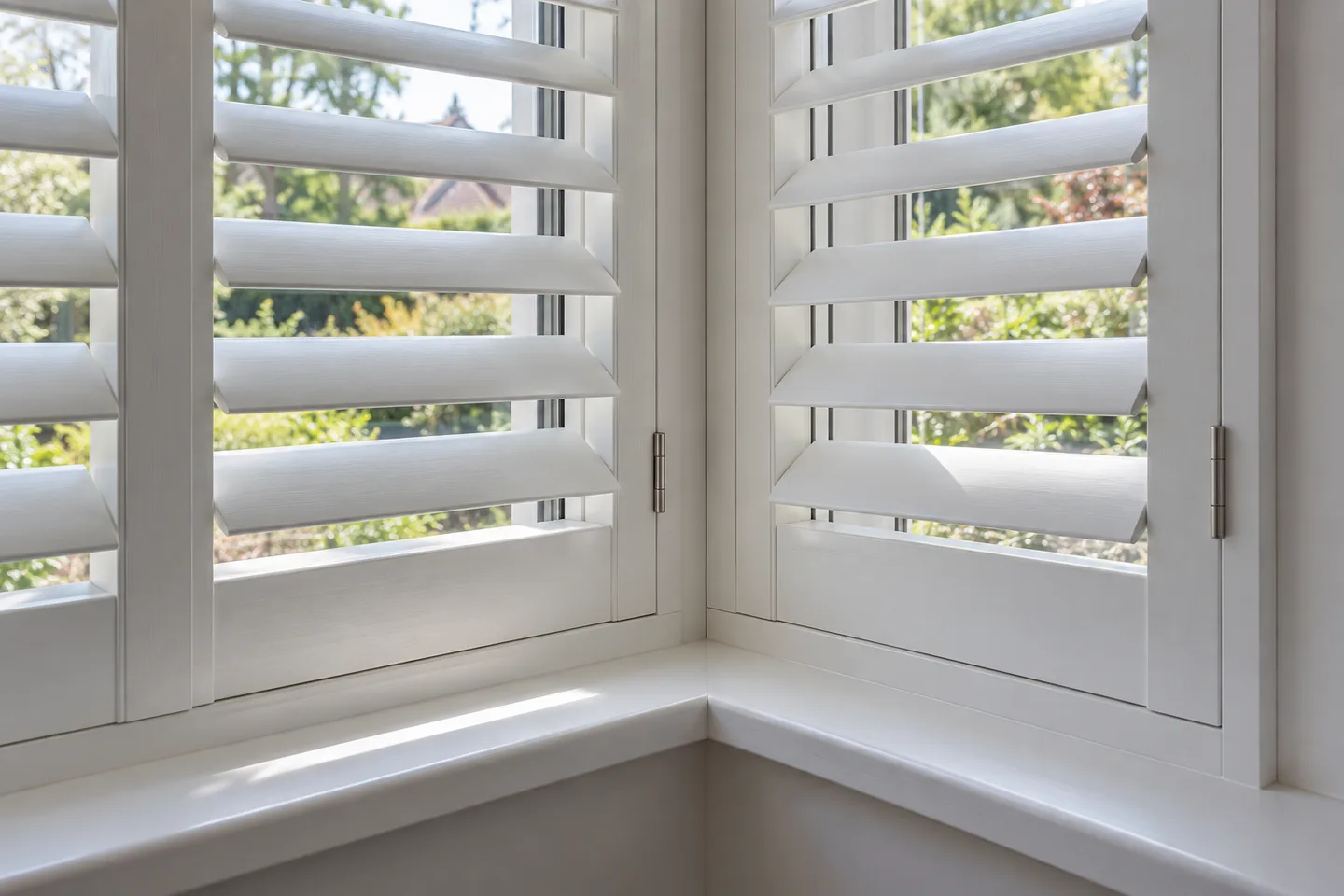
A wider blade sweeps through more space as it turns. Window handles, glazing bars and the recess can affect how far forward the shutter frame needs to sit. We check these together rather than applying one clearance measurement to every window.
On a bay, we also check the junctions between adjacent panels. Read our square and box bay shutters guide for more on right-angle corners, or explore shutters for sash windows.
Our Austin and Newport hardwood ranges span 47mm to 114mm. Mayfair and Battersea faux wood offer 63mm, 76mm and 89mm. For Dulwich waterproof PVC, we confirm suitable options for your window at the survey.
For a wet room, choose the appropriate waterproof shutter material first, then compare the available louvre sizes. See our styles and ranges for the full collection.
An alternative to adjustable slats
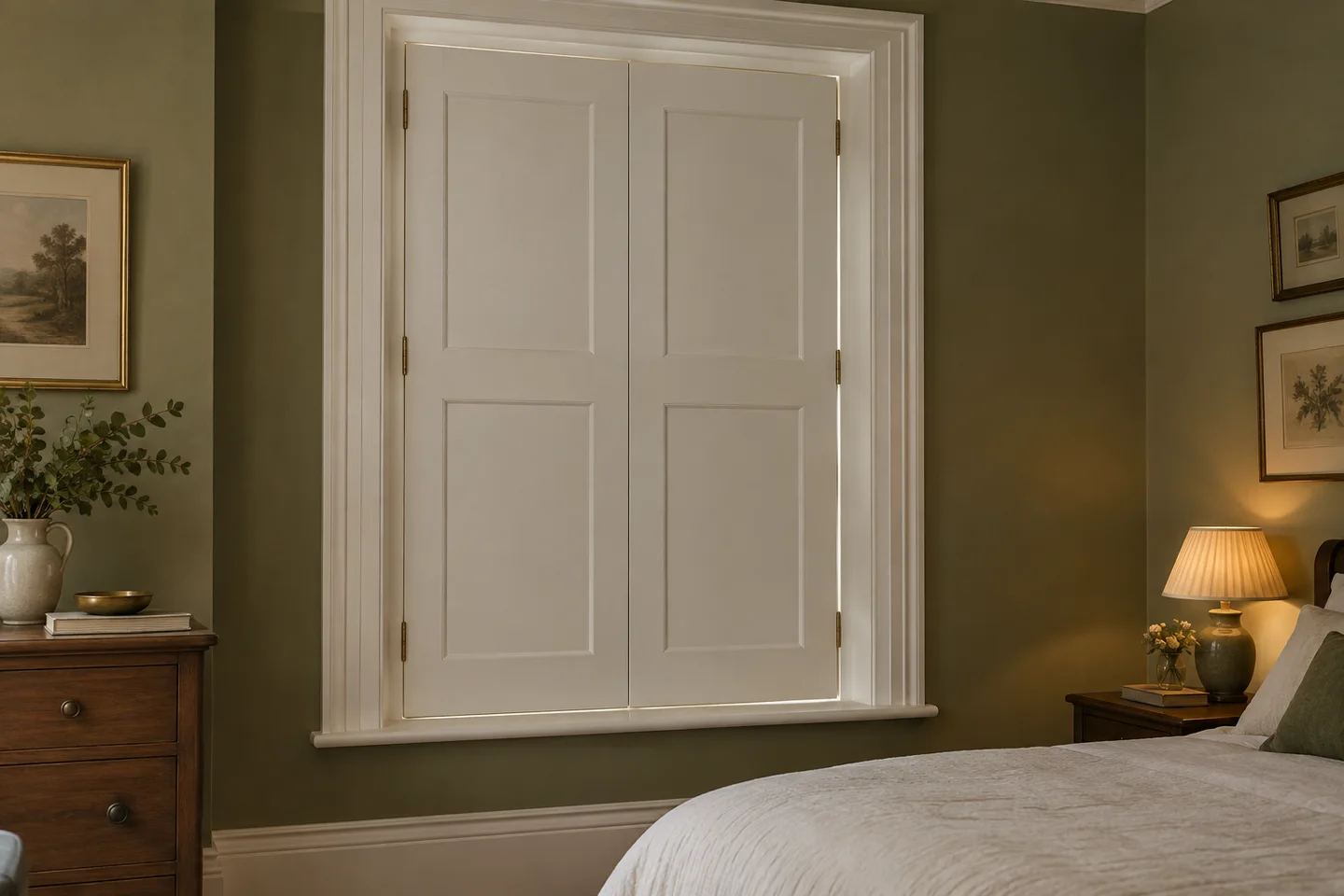
Solid shutters are shown beside the louvre sizes in the comparison, but they are a different panel style. There are no slats to tilt: you open the doors for light and a view, and close them for privacy and room darkening.
They can suit a traditional bedroom or period interior where you want an unbroken panelled finish. Light may still enter around the edges, so solid panels alone should not be treated as a guaranteed total-blackout system.
We recommend starting with 76mm for a balance of daylight and an open view, subject to the window and fitting clearance. Compare 89mm if you prefer broader blades, or 63mm for finer detail, matching existing shutters or a more restricted fitting space.
Choose the tilt and coverage around the view from outside. Smaller slats create closer horizontal spacing, but they do not guarantee more privacy. Split louvre control can let you close the lower section while leaving the upper section tilted for daylight.
Our collection includes 47mm, 63mm, 76mm, 89mm and 114mm. Availability depends on the material and range. You may see 63mm described as approximately 2½ inches, 76mm as 3 inches, 89mm as 3½ inches and 114mm as 4½ inches.
For a new installation where daylight is a priority, start with 76mm. It generally lets in more light with the blades fully open than a comparable 63mm design. Choose 63mm for a finer pattern, matching existing shutters or where the fitting needs a smaller blade. We check folding arrangements separately.
No. Both 63mm and 76mm can be used in suitable folding shutter systems. A smaller blade needs less turning space, but how the panels fold depends on their widths, hinges, frame position and tilt controls. The louvres may need to be closed before folding the panels together; we confirm this for the chosen design.
Yes. A consistent size can help windows on the same front elevation look coordinated, but a bathroom, bedroom and garden-facing room can have different priorities. We can discuss a room-by-room specification.
Ask for a quote for your chosen range and configuration. Material, overall size, panel layout and installation all affect the price, so a larger blade alone does not tell you the final cost.
For interior window coverings, plantation shutters usually have adjustable horizontal louvres within hinged or tracked panels. Louvre is the usual British spelling; louver is the American spelling. Solid shutters have panels without these adjustable slats.
Made to measure in London
Tell us which rooms you are considering and what matters most: privacy, daylight or the view. At your free home survey, we will check the window, discuss the louvre sizes and plan the fitting.
A photo and approximate dimensions can help us start. We take the final manufacturing measurements before your shutters are ordered.
Explore indicative shutter prices →
Prefer to talk? 0208 419 8782