
A small detail. An everyday difference.
63mm or 76mm Shutter Louvres
Start with 76mm if you want an open view and plenty of daylight. Compare 63mm if you prefer finer horizontal detail, want to match existing shutters or have limited blade clearance.
The best choice comes from seeing both at your window. This guide shows what to compare, which fitting details matter and how to avoid choosing the wrong size for the wrong reason.
By London Shutter Specialists · Published 6 October 2026 · Updated 12 October 2026
Compare the two sizes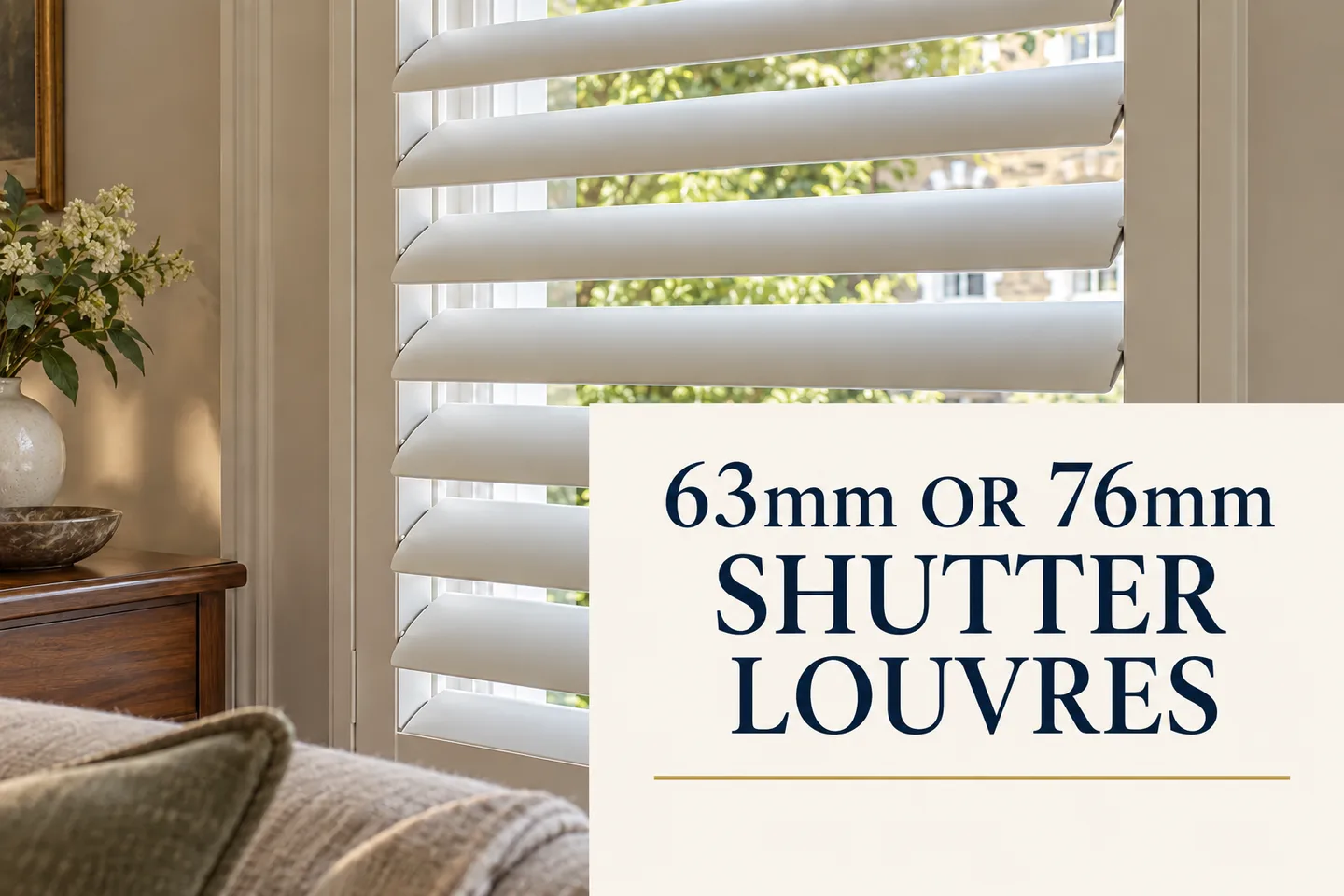
63mm vs 76mm: the differences that matter
Both sizes have adjustable blades for light and privacy. The difference is the blade width and the pattern it creates within the panel. Compare like-for-like samples: the same colour, panel size and tilt angle.
Swipe sideways to read the full comparison.
| What matters to you | 63mm louvres | 76mm louvres |
|---|---|---|
| The look | A finer pattern with more horizontal lines. | A broader pattern with fewer horizontal lines. |
| The open view | More blades across a comparable panel height. | Usually fewer interruptions when tilted fully open. |
| Privacy | Check the viewing angle and tilt; size alone is not a guarantee. | Can provide privacy too; check the same sightlines. |
| Turning clearance | The narrower blade generally needs less turning space. | The wider blade needs its sweep checked against handles and glass. |
| Matching existing shutters | Useful where the existing specification is 63mm. | Useful where the existing specification is 76mm. |
| Price | Compare a complete quote for the chosen range. | Ask for the same specification in this size. |
What do 63mm and 76mm actually measure?
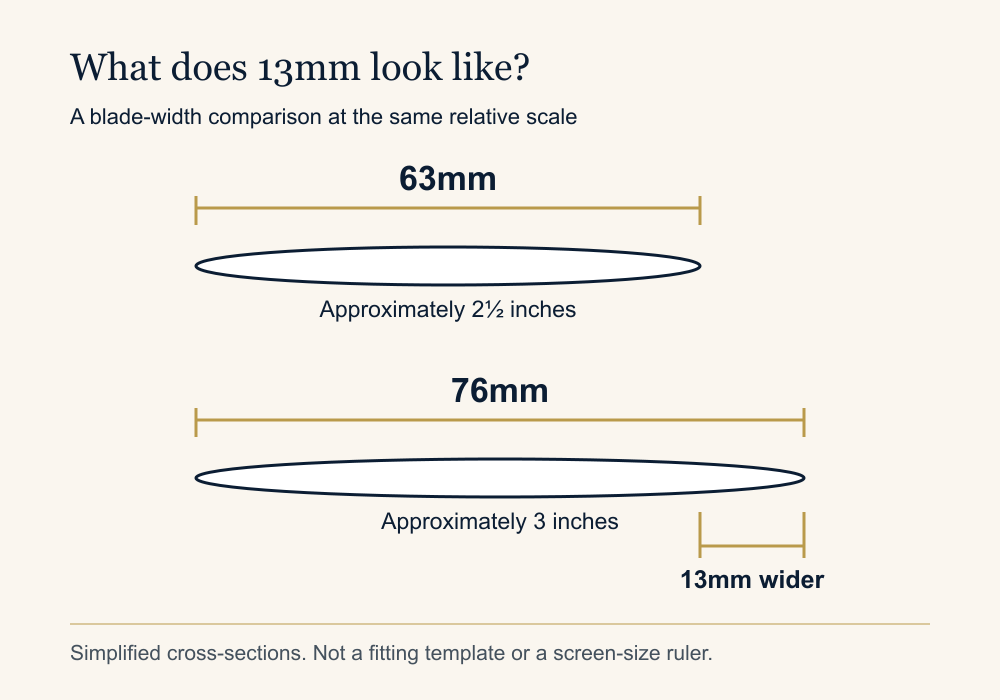
A louvre is a horizontal blade inside the shutter panel. The quoted size is its width from one long edge to the other. It is not the blade length across the window, the gap between open blades or the depth your recess needs.
76mm is 13mm wider than 63mm. In familiar inch sizes, that is approximately 3 inches rather than 2½ inches. The difference is modest on a single blade but repeats throughout the panel.
Do not calculate the blade count by dividing your window height by 63 or 76. Rails, overlap, spacing and the selected system affect how many blades fit. For all five sizes, see our complete shutter louvre size guide.
63mm louvre shutters: finer detail and matching existing shutters
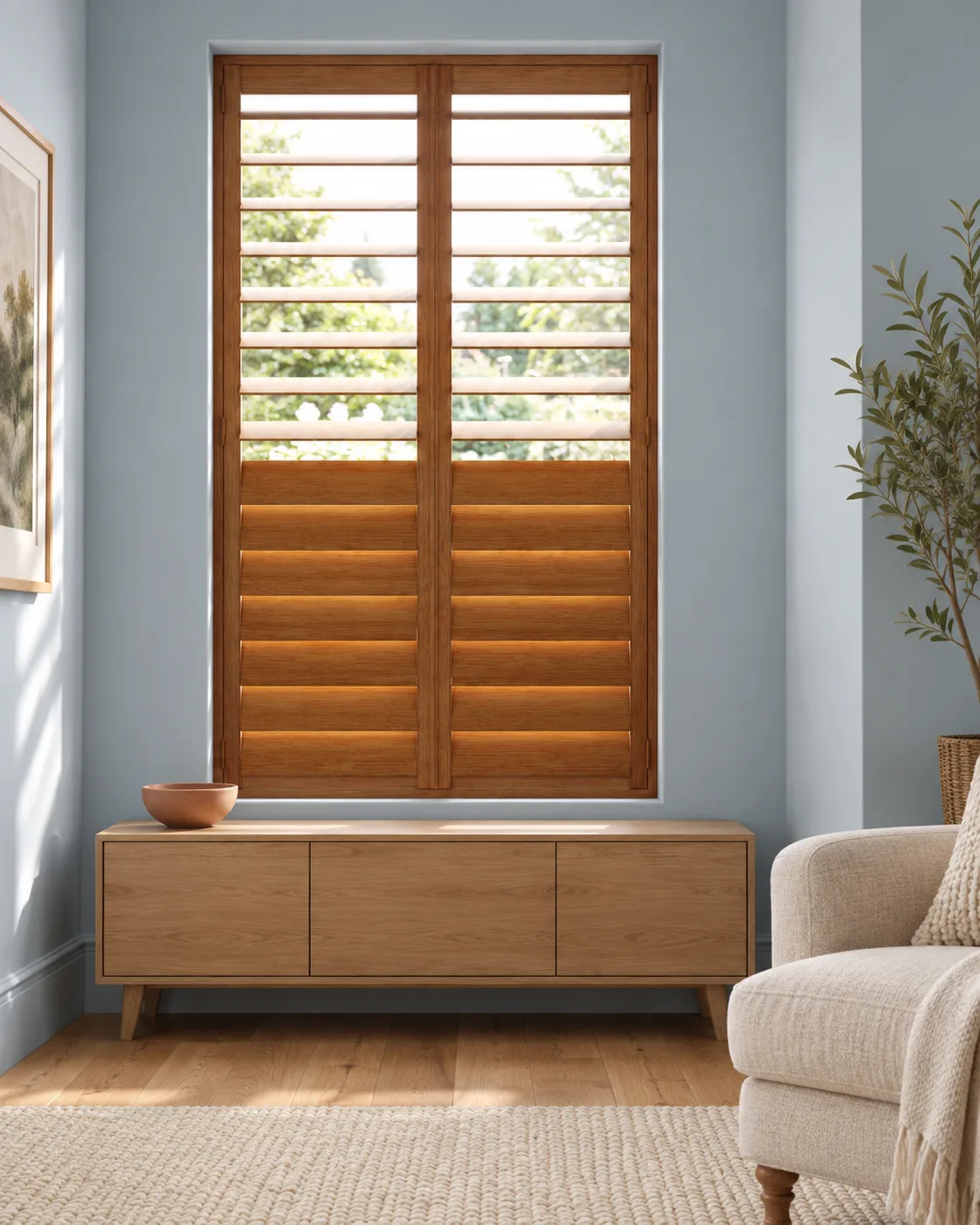
63mm louvre shutters create a finer horizontal pattern, with more blades across a comparable panel height. They are worth comparing if you like that detail against sash-window glazing bars or want to coordinate with shutters already fitted elsewhere in your home.
The narrower blades generally need less turning space, which can help where handles or window fittings limit clearance. We still check the complete frame and panel arrangement at the survey. If you are matching existing shutters, compare the blade profile, colour and rail positions as well as the nominal 63mm size.
76mm louvre shutters: daylight and views
In a comparable shutter design, 76mm blades generally give a clearer view and admit more daylight when fully open because there are fewer blades across the height. That is why we recommend starting here for a new installation where light matters.
How bright the room feels also depends on the number of panels, the width of their frames, any mid-rails and the position of the window. A change from 63mm to 76mm cannot compensate for a layout with unnecessary panel divisions.
Make the comparison fair
Hold both samples against the same window and open the blades to the same angle. Look from your usual chair or desk. Then partly close both to manage glare. This shows the view you will actually use, rather than the most flattering angle in a showroom photograph.
There is no single reliable percentage of extra light for every installation. A 13mm increase in blade width is not a percentage increase in daylight.
Privacy depends on the sightline, not just the slat size
Neither size is a one-way screen. Someone on the pavement, in an upstairs room opposite or beside a basement window sees the blades from a different angle.
For a street-facing room, ask someone to check the view from outside while you adjust a sample inside. Repeat with the room lights on after dark where practical. The right tilt direction depends on where the overlooking view comes from.
Consider split tilt before going smaller
If you want to screen the lower window while admitting light above, independently controlled louvre sections may be more useful than choosing 63mm by default. Split tilt adjusts sections within a panel; tier-on-tier gives you separate opening doors. They solve different needs.
See the split-tilt options and confirm availability in your chosen range.
For bedrooms, decide how dark you need it
Smaller blades do not make standard shutters blackout. Light can still pass through joins and around the frame. If early morning light affects your sleep, compare a compatible blind-and-shutter arrangement in our blackout guide.
Check handles, recess depth and the way panels fold
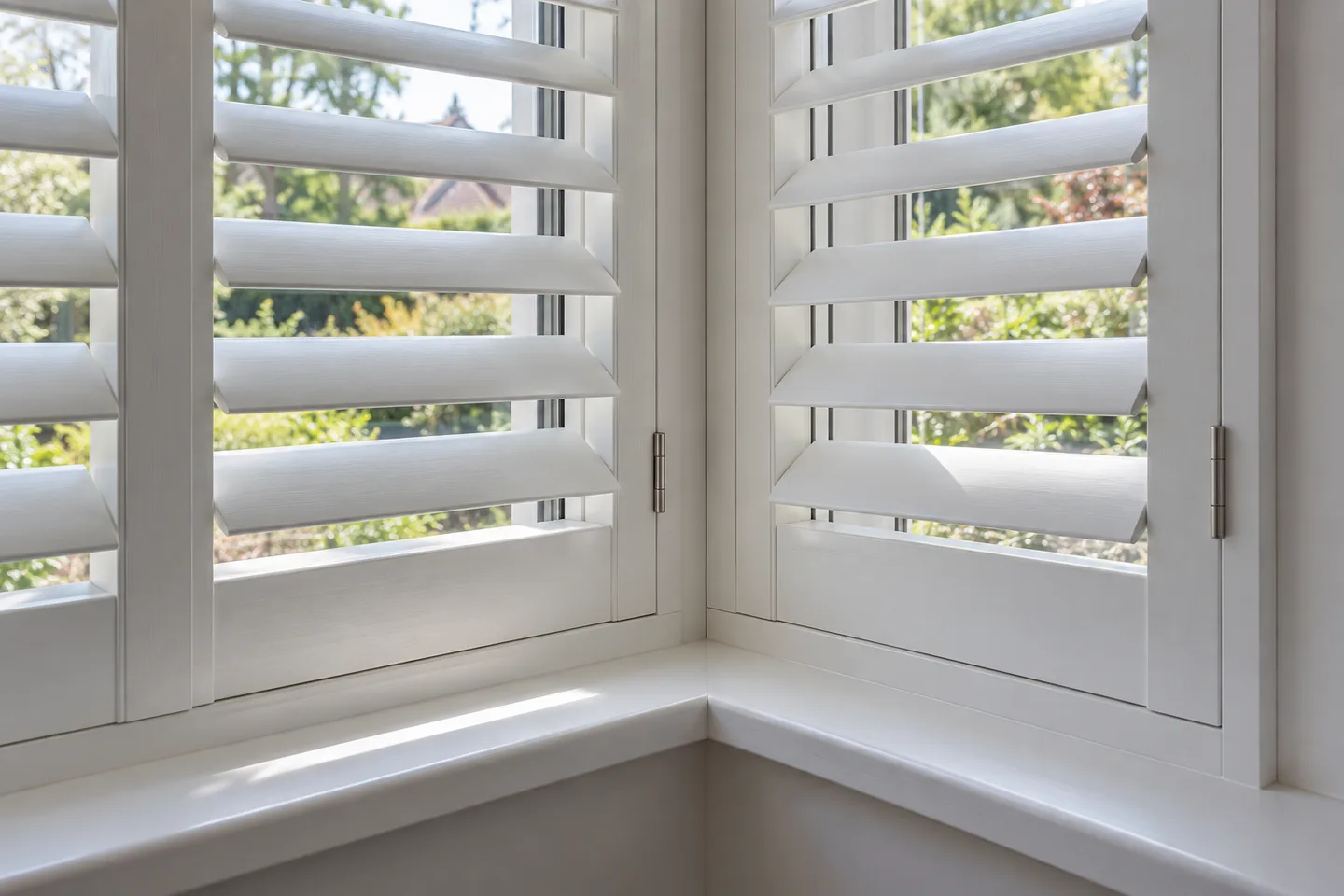
Wider blades sweep through a larger space as they rotate. A projecting handle, sash bead or nearby glass can affect the fitting position. A deeper frame or a different mounting position may help, subject to the window and shutter system.
There is no universal recess-depth rule based on blade width alone. The frame, pivot position and control mechanism all matter. We check the working clearance for the actual range rather than borrowing a measurement from another product.
Bi-folding does not automatically mean 63mm
Both sizes can work in suitable folding systems. The panel widths, hinges, controls and frame position determine how they stack. Some arrangements require the blades to be closed before the panels fold together.
At the survey, explain whether you expect to tilt the blades most days or fold the panels away. Ask to see how your proposed layout opens, including the side returns of a bay and any furniture beside it.
Choose around your window and daily routine
A living-room bay
Start with 76mm, then compare the whole bay layout from your sofa. Keep panel divisions considered and check each corner. If you want to match an existing 63mm bay elsewhere on the frontage, bring that into the decision.
A period sash window
Compare both against the glazing bars, rails and architrave. A finer 63mm pattern may be your preference, but a period home does not automatically require smaller blades. Either size needs clearance around catches and beads.
A bedroom or overlooked room
Choose your coverage and privacy controls first. Test the sightline at the height of the bed or the overlooking window. Decide separately whether you need an additional blackout blind.
A bathroom or shallow recess
Confirm a material suited to the moisture and a workable frame position. Compare 63mm if clearance is tight, but have the complete system checked before assuming it will fit.
Explore our sash-window, bay-window and bathroom shutter guides for the other choices involved.
Five things to check with the samples
- 01
Look from where you sit
Compare 63mm and 76mm at eye level from the sofa, bed or desk. Look both through the slats and at the pattern across the room.
- 02
Use the same tilt angle
Start with both fully open, then adjust for glare. Keep colour, panel dimensions and lighting as similar as possible.
- 03
Test the view from outside
Check pavement and neighbouring-window sightlines. Ask how split tilt could help where privacy and daylight compete.
- 04
Check the moving parts
Confirm clearance for blades and handles, then ask how the panels open or fold. Include window seats, radiators and furniture.
- 05
Get the chosen details in writing
Your quote should name the louvre size, material, colour, frame, tilt control and panel layout. If comparing prices, keep these other choices consistent.
For care, follow the selected material’s instructions and support the blades gently when cleaning. A 76mm layout usually has fewer individual slats to dust, but that alone should not decide your purchase. See our pricing guide for an indicative overall budget.
Common questions about 63mm and 76mm shutters
Which is better: 63mm or 76mm shutter louvres?
Our starting recommendation is 76mm for daylight and a less interrupted view, where the fitting allows it. Choose 63mm if you prefer a finer pattern, need to match existing shutters or the smaller blade suits the available turning space. Compare samples at your own window before deciding.
Are 76mm louvres too big for a small window?
Not automatically. Look at the usable panel height, frame and rail proportions, blade clearance and the overall pattern. A small window can still benefit from a less busy layout. Check both samples rather than choosing from the window width alone.
Do 63mm louvres give more privacy?
Closer spacing can change the view through partly open blades, but privacy depends on the viewing angle, blade tilt and coverage. Both sizes can screen a room when correctly adjusted. Check the sightline from outside, including after dark with the room lights on.
Do 76mm shutters cost more than 63mm?
We do not apply a universal price difference in this guide. Ask for both sizes in the same material, finish, frame and panel layout. The complete supplied-and-fitted specification determines the quote.
Can I replace 63mm blades with 76mm later?
Do not assume it is a simple swap. Blade spacing, pivot positions and the control mechanism are designed together. A size change may require replacement panels or a different specification; it needs an assessment of the existing shutters.
Are 63mm and 64mm shutters the same?
Some suppliers label the smaller option 63mm and others 64mm. Check the actual range and profile when matching existing shutters. A similar nominal size is not proof that replacement blades, colours or controls are compatible.
Can I mix louvre sizes in different rooms?
Yes, subject to the chosen range. For windows seen together from the street, compare the full elevation before mixing sizes. Matching colour, panel divisions and rail heights also helps the windows look coordinated.
Do bi-folding shutter panels need 63mm louvres?
No. Both sizes can work in suitable systems. Hinges, panel widths, controls and frame position determine how the panels fold and stack. You may need to close the blades before folding; ask for the intended operation to be demonstrated.
See the difference at your window
Compare louvre options at your free survey
Tell us which rooms you are considering and whether daylight, privacy or matching existing shutters comes first. We’ll help you choose the louvre size alongside the frame, controls and panel layout.
We supply and fit shutters across London. Available sizes and controls depend on the selected range. Photographs are illustrative design inspiration rather than completed installations or measured size comparisons.