
Summer comfort
How to keep your house cool in a heatwave
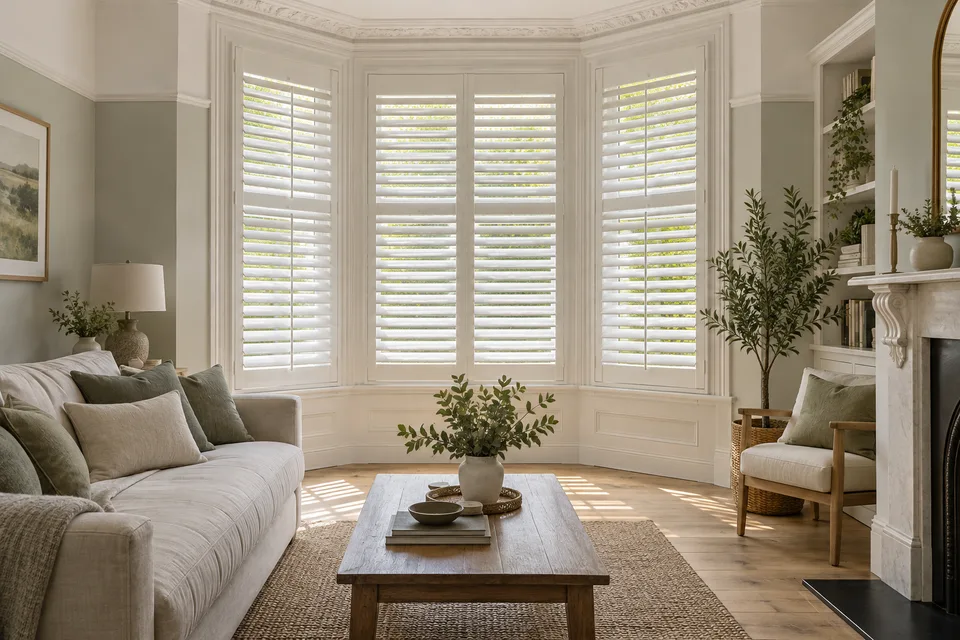
Shade sunny windows before the room heats up, keep hotter outdoor air out, and ventilate when it is cooler outside. Light-coloured shutters help shade your rooms and reflect sunlight, making them a practical choice for a more comfortable home in summer.
By London Shutter Specialists · Advice checked 23 September 2026
Is it better to keep windows closed on a hot day?
Yes, when it is hotter outside than inside. Opening a window then can bring warmer air into the room. Once the outdoor air is cooler, open windows where safe and try to create airflow through the home. The temperature difference matters more than a fixed opening time.
This follows UKHSA’s hot-weather advice (opens in a new tab). Night-time ventilation still needs to account for security, children and the safety of the opening.
How to keep your house cool in summer: a simple routine
When the sun reaches your windows
Close or angle coverings to shade the glass. Keep windows shut while the air outside is hotter.
During the day
Switch off unused lights and equipment. Avoid adding unnecessary cooking heat; prepare meals at a cooler time where practical.
When outside cools down
Open safe windows to let cooler air through. Open shutter panels where needed so they do not obstruct the airflow.
Before bed
Choose the coolest available room rather than assuming every room will cool at the same rate.
See the GOV.UK keep-cool-at-home checklist (opens in a new tab) for preparation and ventilation advice.
Do shutters keep heat out?
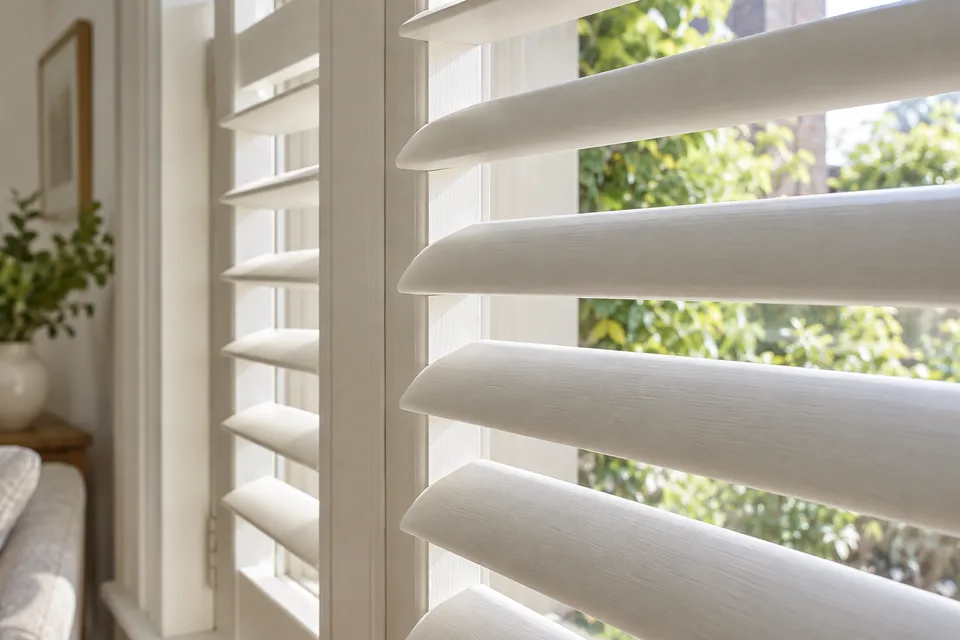
Yes—plantation shutters can help keep unwanted heat out by shading your room from the sun. Close or angle the louvres before strong sunlight reaches the window to reduce the direct sun falling onto furniture and floors, while keeping control over daylight and privacy.
For our interior shutters, the practical approach is to adjust them before strong sun reaches the room. Full-height shutters can shade the whole opening; café shutters leave the upper glass exposed. With a bay window, check each face as the direction of sunlight changes.
White and other light-coloured finishes are particularly useful because they reflect more sunlight than darker finishes. The US Department of Energy’s window shading guidance (PDF) (opens in a new tab) recommends highly reflective, light-coloured interior coverings to help reduce solar heat gain.
Do wooden and PVC shutters help keep heat out?
Yes—both wooden and PVC shutters provide useful shade, and a light-coloured finish adds the benefit of reflecting sunlight. Their adjustable louvres make it easy to screen direct sun as it moves around your home. Wood and PVC are also poor conductors of heat compared with metal, making them useful materials for an insulating window covering.
Choose wooden shutters for their finish and character, or waterproof PVC shutters for moisture-prone rooms. A well-fitted frame and the right coverage help you make the most of either material.
Interior shutters versus external shutters to keep out heat
The GOV.UK Beat the Heat checklist (opens in a new tab) specifically mentions shutters. It recommends considering internal blinds or curtains, and describes external shutters, roller blinds and awnings as effective options. It is a helpful reminder that shading your windows is an important step towards a cooler home.
Both interior and exterior shutters help manage sunlight. External shutters shade the glazing from outside, while interior plantation shutters provide adjustable shade from within the room, alongside everyday privacy and light control.
The US Department of Energy’s exterior shades and shutters factsheet (opens in a new tab) describes external shading as a way to reduce solar heat gain, with performance affected by the construction and openness of the covering.
Do exterior roller shutters keep heat out? Yes—they can help by covering the window before sunlight reaches the glass. For homeowners looking for an interior option, our made-to-measure plantation shutters combine summer shading with a finish designed around your room.
How to keep a room cool in extreme heat
Concentrate on the room you are using: shade its sunny windows, reduce heat from equipment and use cooler outdoor air when available. A home office with a computer running all day may need a different routine from an unused bedroom.
Fans move air rather than refrigerating a room. GOV.UK advises using electric fans below 35°C and not directing them at your body. Follow its current fan guidance (opens in a new tab); a fan is not a substitute for moving somewhere cooler if your room remains dangerously hot.
Keep yourself cool too. Drink regularly and cool your skin with water. Check on people who may need help. If you feel unwell, follow NHS advice on heat exhaustion and heatstroke (opens in a new tab). Call 999 for suspected heatstroke, including confusion, a seizure or loss of consciousness, or if someone remains unwell after 30 minutes of cooling, rest and fluids.
Do shutters keep heat in—and are they good for insulation?
Yes—closed, well-fitted shutters can help keep warmth in by adding an insulating layer at the window. This makes them useful beyond summer: shade when the sun is strong, and an extra barrier to heat loss on colder evenings.
Historic Environment Scotland’s sash-window guidance (opens in a new tab) explains how traditional timber shutters reduce overnight heat loss. For modern plantation shutters, closing the panels and louvres and choosing a close-fitting design helps create that additional layer between the room and the glass.
Make them part of your daily routine: shade sunny windows in summer, open up when cooler air can flow through, and close the shutters as temperatures fall on winter evenings. The right layout lets you balance comfort, daylight and privacy throughout the year.
Sources are linked beside the relevant advice. This guide covers home comfort; use current UKHSA and NHS guidance for heat-related health concerns. Advice checked on 23 September 2026.
← More shutter advice